

Advancing the rapidly developing field of space robotics was the central focus of the International Conference on Space Robotics (iSpaRo2025), held from December 1st to 4th at the Sendai International Center in Sendai, Japan. Now in its second edition following its inaugural event in Luxembourg, iSpaRo aims to provide a dedicated platform for scientists, engineers, and industry leaders to exchange insights on emerging capabilities in in-orbit servicing, satellite operations, and planetary exploration. Renewed interest in the Moon, recent discoveries in Mars and Near-Earth Asteroid (NEA) exploration, and the rise of new ventures targeting the prospection, extraction, and utilization of space resources have sparked a new wave of research and commercial opportunity (Reference: iSpaRo2025 website). This year’s conference welcomed around 300 participants, with nearly half traveling from overseas, underscoring the strong global momentum behind robotics as a key enabler of the next era of space activity.
The iSpaRo2025 logo features a robotic rover, a satellite, the downtown
Sendai cityscape, and a star that pairs with the crescent-moon helmet of Sendai’s founder,
the feudal samurai warlord Date Masamune. (Photo courtesy of iSpaRo2025)
To better understand what set this conference apart from other robotics conferences, why Sendai was chosen as the host city, and how we might further enhance our support for future events, staff from the Sendai Convention Bureau spoke with several participants and organizers while also observing the onsite proceedings.
iSpaRo 2025 Publication and Award Co-Chair Prof. Yang Gao of King’s College London, UK, and now affiliated with Hong Kong University of Science and Technology, explained what sets iSpaRo apart from other space robotics conferences: “The conference was created to provide a stronger academic focus, since many similar events are primarily organized by space agencies or industry groups.” She went on to add, “While government organizations and private enterprises are very welcome, emphasizing academia allows the conference to center on peer-reviewed papers, ensuring high-quality research and development, and fostering open sharing of knowledge through publications.”
Prof. Gao also highlighted the conference’s international approach, noting that iSpaRo rotates its location each year to engage different regions. “Japan is an ideal venue for the Asia-Pacific region due to its international accessibility, safety, and cultural appeal,” she said. “Combined with the country’s strong robotics industry and the active research community in Sendai, including institutions such as Tohoku University, the city emerged as a strong candidate to host the conference.”
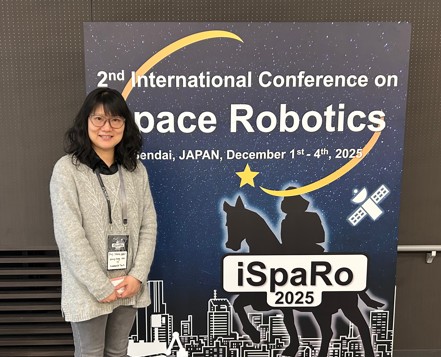
iSpaRo2025 Publication and Award Co-Chair Prof. Yang Gao.
(Photo courtesy of Sendai Convention Bureau)
A glance at the program made it clear that, despite being a young conference, iSpaRo2025 set ambitions on par with long-established international events. Presentations featured representatives from ESA (European Space Agency), JAXA (Japan Aerospace Exploration Agency), and even the U.S. Navy, alongside a strong lineup of industry sponsors, an engaging exhibition, and several networking and social programs. For a conference only in its second edition, there seemed to be no limits to what could be achieved in such a rapidly evolving field.
Coordinating this extensive program was Dr. Kentaro Uno, General Secretary of iSpaRo2025 and an Assistant Professor at Tohoku University. Speaking briefly between managing sessions and guiding an energetic team of officers and staff, Dr. Uno described both the challenge and the reward of hosting the event. “It is my first time organizing a conference of this scale within such a short preparation period, so the process has been extremely challenging and demanding,” he said. “At the same time, I am grateful for the opportunity to showcase Sendai’s natural, cultural, and technological strengths to visitors from around the world. I would especially like to thank Prof. Genya Ishigami, General Chair of iSpaRo2025, Prof. Kazuya Yoshida, a member of the Advisory Board, and the other iSpaRo2025 conference committee members for their guidance and support—this conference simply would not have been possible without them.”
Professor Kazuya Yoshida, a renowned figure in the field of space robotics and head of the aerospace engineering program at Tohoku University, specializes in space-robot dynamics and planetary rover control. Although he could have led the conference himself, Prof. Yoshida encouraged Dr. Uno to take the helm to further grow as a future leader and collaborator in the industry.

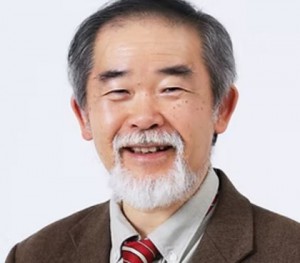
Profile pictures of iSpaRo2025 General Secretary Dr. Kentaro Uno (left), and
iSpaRo2025 Advisory Board member Professor Kazuya Yoshida (right).(Photos courtesy of iSpaRo2025)
A notable feature of the iSpaRo2025 program was the many opportunities for participants to connect outside the packed schedule of presentations and workshops, as well as the conference’s strong engagement with local facilities, institutions, and even the community. These elements highlight the value of MICE events not only for their economic impact, but also for their contributions to community engagement, cultural exchange, legacy building, and long-term regional vitality.
Our bureau staff met Dzakwaan Haniif, a research student from the Institut Teknologi Bandung (Indonesia) currently in Sendai for a six-month research exchange at Tohoku University. Serving as general support staff during the conference, Dzakwaan offered valuable insights drawn from his experience attending robotics conferences in Indonesia and from seeing Japan—and Sendai—for the first time as a MICE destination.
“Indonesia has a strong robotics industry, but Japan is on another level,” he noted. “In space robotics especially, the number of universities with dedicated laboratories and study programs is impressive. Japan has built a powerful system where academia, government, and industry work closely together. Being part of this conference allowed me to see that collaboration come to life.”
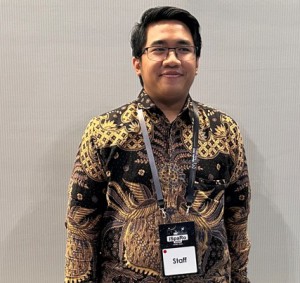
Dzakwaan Haniif, a research student from Indonesia on exchange
at Tohoku University, supported iSpaRo2025 as a staff member.
(Photo courtesy of Sendai Convention Bureau)
Living in Sendai, Dzakwaan also shared his reasons about the city’s strengths as a host for international conferences. Sendai’s compact layout, convenient airport connections across Asia, and its 90-minute Shinkansen link to Tokyo make it highly accessible. The city center is walkable, and the Sendai International Center is just a five-minute metro ride away. The venue is also located near major cultural and historical landmarks, including the Site of Sendai Castle, the Sendai City Museum, Miyagi Museum of Art (closed for renovations until 2026) and several Tohoku University campuses—offering a range of easy excursion options even for visitors with tight schedules.
On the second day of iSpaRo2025, participants chose between a Technical Tour of Tohoku University laboratories or a Historical Tour featuring the Sendai City Museum and the adjacent Ryokusaikan Visitor Center. The latter introduces visitors to Sendai’s rich cultural heritage through displays of Tanabata Festival streamers, a parade float from the Aoba Festival, tourism exhibits, and traditional craft items. The facility also includes a restaurant, a tatami-mat room, and a spacious hall often used for unique-venue events and cultural programs.
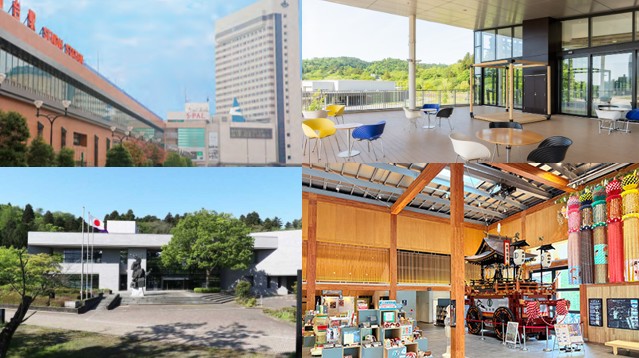
Sendai offers MICE planners a wide range of off-site venues ideal for excursions, receptions,
and unique meeting experiences. Pictured clockwise from top left: Sendai Metropolitan Hotel, Aoba-no-Kaze
Terrace, Ryokusaikan Visitor Center, Sendai City Museum. (Photo courtesy of Sendai Convention Bureau)
The conference’s social programs further showcased Sendai’s hospitality. A Welcome Party was held at the Aoba-no-Kaze Terrace Facility on the second floor of Sendai International Center Subway Station, offering both a fully equipped indoor venue and an outdoor terrace with views of the surrounding greenery, the gently flowing Hirose River, and the stone wall remains of the Site of Sendai Castle. The Gala Dinner & Awards Ceremony took place at the Sendai Metropolitan Hotel, directly connected to Sendai Station and well-equipped with MICE facilities capable of hosting large receptions of up to 1,000 participants.
The iSpaRo2025 conference occupied roughly two-thirds of the exhibition wing of the Sendai International Center, along with two additional seminar rooms. The main exhibition hall was divided by removable walls, with the section near the entrances left open to allow smooth movement between spaces. One room hosted the primary seminars, workshops, panel discussions, and presentations, while the other served as the exhibition area, also accommodating coffee breaks, bento lunches, and networking. Although another portion of the exhibition space was being used for a separate conference, it did not significantly affect participant flow, thanks to clear signage, helpful support staff, and restrooms located on both sides of the venue. This setup highlights the versatility of the exhibition wing, which was completed in 2015 and is designed to support multiple concurrent events or adaptations seamlessly.
iSpaRo2025 brought together a diverse mix of participants, including academia, space agencies, and both established companies and emerging ventures. Sponsors displayed their cutting-edge space robotics developments through information panels, videos, and live demonstrations. Visitors could see a wide range of robotics, from rovers, drones, satellites, mechanical arms, sample collection machines, and even conceptual models of lunar communities and research facilities. In a rare opportunity, the exhibition was opened to the public for several hours on the second day, giving local residents, families, and robotics enthusiasts a chance to experience the displays firsthand.
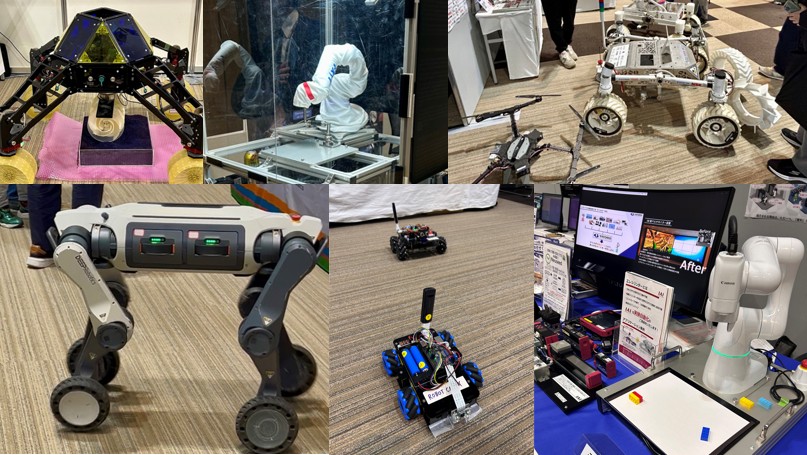
Images of selected space robotics on display at iSpaRo2025 taken by Sendai Convention Bureau staff.
The public exhibition aimed to share insights into the importance of space robotics and to inspire
the next generation of researchers and engineers. (Photo courtesy of Sendai Convention Bureau)
Our staff observed a mother bringing her young son, who was particularly fascinated by the mini rovers and the manned space rover virtual driving simulator. Meanwhile, many participants were captivated by a transformable dog-like robot that could drive like a small car and then switch to four-legged mode, which allowed it to navigate sand, stairs, and even jump over obstacles while being remotely controlled.
Although these technologies are primarily designed for space applications, many of the innovations could also be adapted for use on Earth in challenging or hazardous environments—for research, surveillance, or disaster-response operations—demonstrating how space robotics can have real-world impact beyond their extraterrestrial missions.
“Arigato!” Dr. Uno, Professor Gao, and conference staff Haniif for sharing your thoughts with our Convention Bureau
staff and your hard work in bringing and hosting iSpaRo2025 to Sendai, Japan!
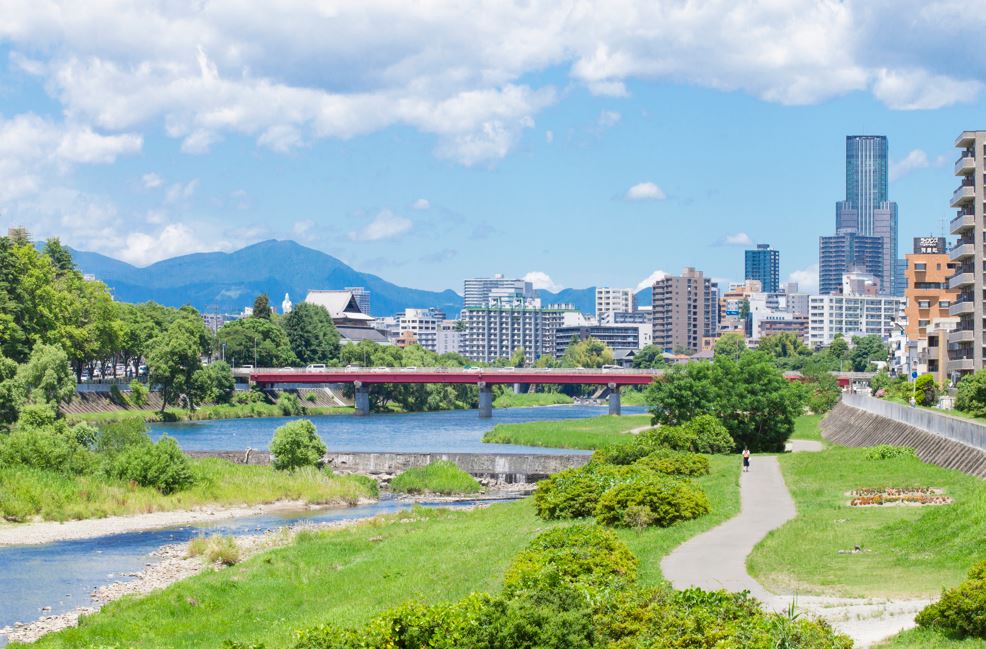
Sendai, the “City of Trees,” is located just 90 minutes north of Tokyo by direct Shinkansen. As the largest city in Japan’s Tohoku region, it has a population of around one million, yet its compact city center feels spacious, convenient, and beautifully integrated with nature. (Photo courtesy of Sendai Convention Bureau)
~~~~~~~~~~~~~~~~~~~~~~~~~~~~~~~~~~~~~~~~~~~~~~~~~~~~~~~~~~~~~~~~~~~~~~~~~~~~~~~~~~~~~~~~~~~~~~~~~~~~~~~~~~~~~~~~~~
Are you a MICE organizer considering hosting your event in Japan? Let’s discuss what Sendai has to offer! Contact us for free consultation and discover Sendai’s appealing event environment and the extensive range of support services we provide:
<Sendai Convention Bureau Inquiry Form>
 topへ
topへ